





November. 11, 2026
Clumping strength is one of the most important performance indicators of clumping cat litter. It determines how well used litter holds together after absorbing liquid and whether the resulting clumps can be easily scooped without breaking apart.
For cat litter manufacturers, wholesalers, and private label brands, strong and stable clumps are essential for product quality and customer satisfaction. But what exactly determines clumping strength, and how can manufacturers improve it?
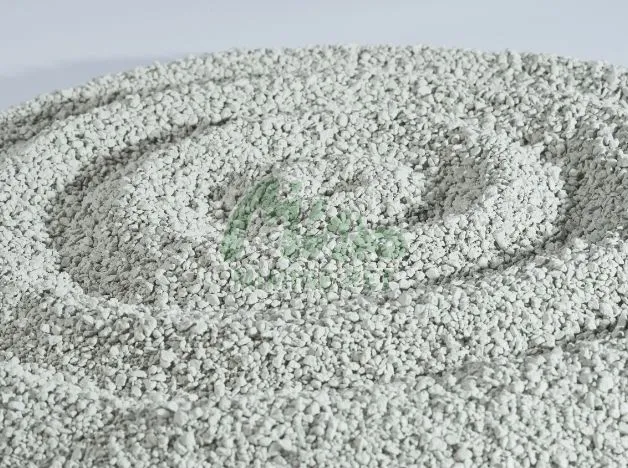
Clumping strength refers to the ability of cat litter particles to bind together after absorbing liquid and maintain their structure during scooping and handling.
A high-quality clumping cat litter product should form compact, firm clumps that are easy to remove from the litter box.
Good clumping performance offers several benefits:
Easier daily cleaning and waste removal.
Less breakage during scooping.
Reduced residue left in the litter box.
More efficient litter usage.
A cleaner and more convenient user experience.
However, strong clumping does not simply mean forming large lumps. The clumps should also maintain their integrity without sticking excessively to the bottom of the litter box.
Several material and manufacturing factors influence the strength and stability of cat litter clumps.
Raw material composition is one of the primary factors affecting clumping performance.
Bentonite cat litter is widely used for its natural swelling and binding properties. When exposed to liquid, bentonite particles absorb moisture and expand, allowing them to form cohesive clumps.
The quality and mineral composition of bentonite can significantly influence its swelling capacity and final clump strength.
Tofu cat litter and other plant-based products rely on their fiber structure and formulation to absorb moisture and form clumps. Their performance depends on raw material selection and processing technology.
Particle size affects how cat litter absorbs liquid and forms clumps.
A balanced particle size distribution helps create more consistent contact between granules and liquid.
If particles are excessively large, liquid distribution may become less uniform. If there are too many fine particles, dust levels may increase and product handling may be affected.
Manufacturers need to control particle size to achieve a balance between absorption, clumping strength, and dust performance.
Moisture content is another important factor in cat litter production.
Excessive moisture during storage can affect product stability, while insufficiently controlled drying may lead to inconsistent product quality.
Maintaining appropriate moisture levels helps preserve the physical properties of cat litter and supports consistent performance during use.
Clumping strength is closely related to how quickly and effectively cat litter absorbs liquid.
For bentonite litter, swelling allows particles to expand and bind together. A suitable swelling response helps create compact and stable clumps.
However, absorption capacity and clumping strength are not exactly the same. A product may absorb a large amount of liquid but still produce weak clumps if its binding properties are insufficient.
Improving clumping performance requires control over both raw materials and production processes.
Key approaches include:
Select Suitable Raw Materials: Use raw materials with appropriate swelling and binding characteristics.
Optimize Particle Size: Maintain consistent granule sizes to support uniform liquid absorption and clump formation.
Control Moisture Content: Apply appropriate drying and moisture-control procedures.
Optimize Formulation: Adjust material composition according to the desired absorption and clumping characteristics.
Maintain Production Consistency: Monitor manufacturing parameters and inspect finished products to minimize batch variations.
These measures help manufacturers produce cat litter with more reliable clumping performance.
Clumping strength should be evaluated through standardized and repeatable testing procedures.
A practical evaluation method includes:
Place a measured quantity of cat litter into a test container.
Add a defined amount of liquid to the sample.
Allow sufficient time for absorption and clump formation.
Carefully remove the formed clump using a scoop.
Observe whether the clump remains intact or breaks apart.
Compare the results across different samples or production batches.
For more accurate quality control, manufacturers can also measure clump weight retention, breakage, and structural stability under defined handling conditions.
Using consistent liquid quantities, sample weights, and testing times is essential for meaningful comparisons.
For wholesalers, distributors, and private label brands, clumping strength is more than a technical specification. It directly influences how customers perceive product quality.
Weak clumps can break during cleaning, leaving residue in the litter box and potentially increasing product waste.
Strong, stable clumps make daily cleaning easier and can improve customer satisfaction and brand reputation.
When sourcing cat litter, buyers should therefore evaluate clumping strength together with absorption rate, absorption speed, dust levels, and granule consistency.
Consistent clumping performance depends on suitable raw materials, controlled production processes, and reliable quality inspection.
At Mimine Pet, we manufacture bentonite, tofu, cassava, and mixed cat litter for global wholesalers, distributors, and private label brands.
With professional production processes covering raw material preparation, grinding, granulation, drying, screening, and dust removal, we focus on product consistency and performance.
Whether you are sourcing bulk clumping cat litter or developing a customized private label formula, choosing the right manufacturing partner is essential.
Contact Mimine Pet to discuss your wholesale cat litter requirements and OEM/ODM solutions.

Previous: None

None Cat Litter Granule Shape: Round, Broken and Bar-Shaped Formats Explained
Related News
July. 29, 2026
Mimine Pet at the 139th Canton Fair
June. 08, 2026
Why More Pet Owners Are Switching to Inorganic Cassava Cat Litter
November. 10, 2025
What’s the Difference Between Clumping and Non-Clumping Cat Litter?
Hot Products

Blue Diamond Starry Sky Cat Litter

Raw Ore Mixed Bentonite Cat Litter | OEM Manufacturer – Mimine Pet


Dust-Free Bentonite Cat Litter


Activated Carbon Tofu Cat Litter


water-soluble granular cassava cat litter


Get Free Samples and Quotes

Contact Mimine Pet
After you complete the information, our staff will contact you to send the catalog. And support to get free samples.

