





October. 10, 2026
When sourcing cat litter in bulk, buyers often focus on quality, price, and absorption performance. However, bulk density is another important factor that directly affects packaging design, container loading, and shipping costs.
For cat litter manufacturers, wholesalers, and importers, understanding bulk density helps optimize packaging specifications and improve transportation efficiency.
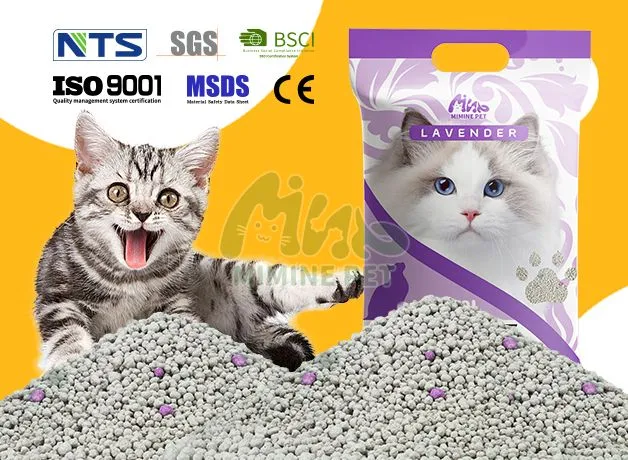
Bulk density refers to the weight of a material per unit of volume, including the spaces between individual particles. It is commonly measured in g/L or kg/m³.
For example, if one liter of cat litter weighs 750 grams, its bulk density is 750 g/L.
Different cat litter materials have different bulk densities due to variations in raw materials, particle size, shape, and manufacturing processes.
Bentonite cat litter is generally heavier, while tofu and cassava cat litter are typically lighter. However, actual density depends on the specific formulation and production conditions.
Bulk density directly determines how much space a specific weight of cat litter occupies.
The basic formula is:
Volume = Net Weight ÷ Bulk Density
For example, two 10 kg cat litter products may require different bag sizes:
Product A: 0.8 kg/L bulk density, requiring approximately 12.5 liters.
Product B: 0.5 kg/L bulk density, requiring approximately 20 liters.
Although both packages contain the same net weight, their required volumes are significantly different.
Therefore, manufacturers need to consider bulk density when selecting bag dimensions, packaging materials, and filling specifications.
For heavier products, packaging must provide sufficient strength to prevent tearing during handling and transportation. For lightweight products, larger packaging volumes may require adjustments to bag structure and design.
Shipping costs are influenced by both cargo weight and occupied volume.
For high-density products such as bentonite cat litter, container loading may be limited by maximum cargo weight.
For lower-density products such as tofu and cassava cat litter, available container space may become the main limitation.
This means that packaging dimensions and loading arrangements play an important role in transportation efficiency.
By understanding product bulk density, buyers can better estimate container requirements, optimize loading plans, and manage shipping costs.
Several factors influence the bulk density of cat litter:
Raw Materials: Different mineral and plant-based materials have different physical properties.
Particle Size: Particle size distribution affects how granules fit together.
Granule Shape: Round, irregular, and bar-shaped particles have different packing characteristics.
Moisture Content: Moisture affects product weight and storage stability.
Manufacturing Process: Grinding, granulation, drying, and screening can influence the final product structure.
Maintaining consistent production conditions helps manufacturers achieve more stable product specifications and packaging results.
To improve packaging and logistics efficiency, cat litter manufacturers should:
Regularly test bulk density to maintain product consistency.
Match bag dimensions to the actual product volume.
Select packaging materials according to product weight and transportation requirements.
Check package strength and sealing performance before shipment.
Optimize container loading based on both weight and available space.
These measures help reduce unnecessary packaging costs, improve shipping efficiency, and protect products during long-distance transportation.
Bulk density may seem like a small technical specification, but it can have a significant impact on packaging, storage, and international shipping costs.
At Mimine Pet, we manufacture bentonite, tofu, cassava, and mixed cat litter for global wholesalers, distributors, and private label brands.
With customized formulations, multiple packaging options, and large-scale production capabilities, we help customers develop cat litter products that meet different market and packaging requirements.
Whether you are sourcing bulk cat litter or developing your own private label brand, choosing the right product specifications is essential for efficient packaging and shipping.

Previous: None

None Cat Litter Granule Shape: Round, Broken and Bar-Shaped Formats Explained
Related News
August. 12, 2026
How to Evaluate Cat Litter Quality Before Placing a Bulk Order
August. 28, 2025
Top Private Label Cat Litter Manufacturers
November. 05, 2026
Mimine Pet Successfully Concludes the 140th Canton Fair 2026
Hot Products

Blue Diamond Starry Sky Cat Litter

Raw Ore Mixed Bentonite Cat Litter | OEM Manufacturer – Mimine Pet


Dust-Free Bentonite Cat Litter


Activated Carbon Tofu Cat Litter


water-soluble granular cassava cat litter


Get Free Samples and Quotes

Contact Mimine Pet
After you complete the information, our staff will contact you to send the catalog. And support to get free samples.

